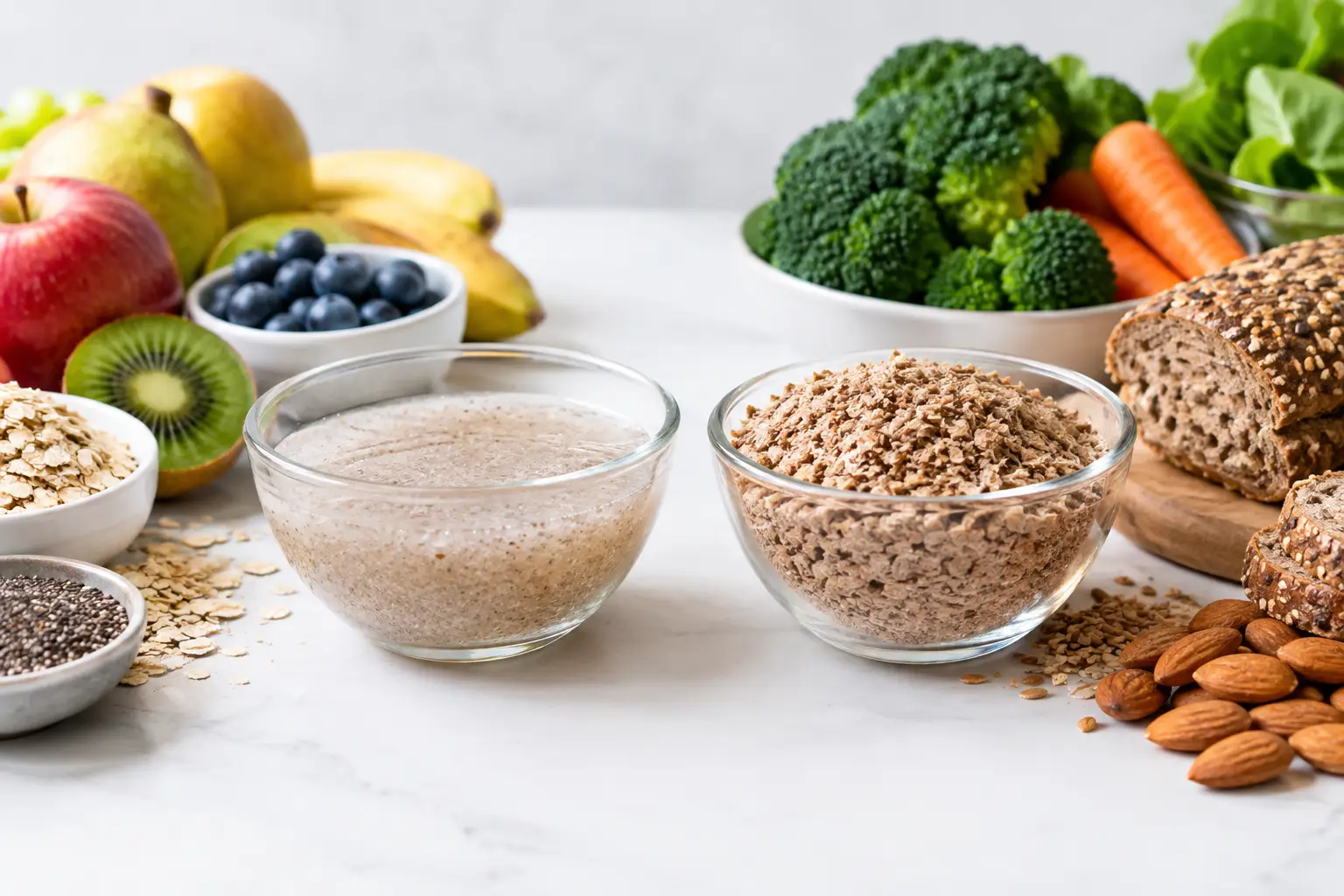
A rushed lunch of crackers, a protein bar, and coffee can get you through a shift, but it may not do much for how your stomach feels later. Soluble versus insoluble dietary fiber is one of those nutrition topics that sounds technical until you connect it to real-life problems: feeling overly hungry an hour after eating, irregular bathroom habits, or that uncomfortable bloated feeling after a week of grab-and-go meals.
The goal is not to obsess over grams or eat perfectly. It is to understand what each type of fiber does, then build more fiber-rich foods into the meals and snacks you already rely on.
Soluble Versus Insoluble Dietary Fiber: The Difference
Fiber is the part of plant foods your body does not fully break down. It supports digestion, but it also affects how satisfying a meal feels and how steadily your body handles carbohydrates. Most plant foods contain a mix of soluble and insoluble fiber, so you do not need to sort every food into one rigid category.
The distinction is useful because each type behaves differently in the digestive tract. Think of soluble fiber as the water-loving type and insoluble fiber as the type that adds structure and bulk. Both belong on your plate.
What soluble fiber does
Soluble fiber dissolves in water and forms a gel-like consistency. That slower movement can help you feel fuller after a meal and can soften stool by holding onto water. It is also fermented by beneficial gut bacteria, which is why it is often discussed alongside prebiotics and gut microbiome support.
Common sources include oats, barley, beans, lentils, chia seeds, ground flaxseed, apples, citrus fruit, carrots, and avocado. You do not need a complicated recipe to get it. Oatmeal with berries, a side of beans, or chia stirred into yogurt can all move the needle.
Soluble fiber is especially helpful when your meals tend to be light on staying power. Pairing it with protein and fat can make a quick breakfast or snack feel more substantial, without relying on another sugary energy drink to carry you through the afternoon.
What insoluble fiber does
Insoluble fiber does not dissolve in water. It adds bulk and can help food move through the digestive system at a regular pace. Foods higher in insoluble fiber include whole-wheat foods, wheat bran, brown rice, nuts, seeds, leafy greens, green beans, cauliflower, and the skins of many fruits and vegetables.
If your routine has been low in produce and whole grains, increasing insoluble fiber can help bring more consistency. But more is not automatically better. Jumping from very little fiber to a giant bran cereal bowl overnight can leave you feeling gassy or uncomfortable. A gradual increase is what actually helps.
Why You Need Both Types of Fiber
It is tempting to look for the one “best” fiber, especially when a product label highlights a single ingredient. Real food works differently. A bowl of oats may offer more soluble fiber, while berries, nuts, and vegetables add varying amounts of both types. Together, they support fullness, regularity, and a more diverse fuel source for gut bacteria.
The mix that feels best can depend on your current habits. Someone whose meals are mostly refined carbs may benefit from simply adding beans, fruit, vegetables, and whole grains. Someone already eating plenty of high-fiber foods but feeling uncomfortable may need to slow the pace of change, drink more fluids, or spread fiber across the day instead of piling it into one meal.
For context, the Daily Value used on US food labels is 28 grams of fiber per day. Your personal needs can vary, and you do not need to hit a perfect number every day. The bigger question is whether your usual routine includes a few dependable fiber sources, not whether one smoothie was exceptionally virtuous.
A Fiber Routine That Works on Busy Days
For nurses, parents, travelers, and anyone working through unpredictable schedules, fiber often disappears because convenience wins. The fix does not need to be meal prep worthy of social media. Start by adding one fiber-containing food to meals you already eat.
At breakfast, choose oatmeal, whole-grain toast, fruit, or a handful of berries with your usual protein. At lunch, add beans to a salad or grain bowl, choose a sandwich on whole-grain bread, or keep an apple alongside your meal. At dinner, frozen vegetables, lentils, brown rice, or a baked potato with the skin can work just as well as more elaborate options.
Snacks count, too. A pear with nuts, popcorn, roasted chickpeas, or whole-grain crackers with hummus can be more useful than relying on snack foods that leave you hungry again 30 minutes later. If fresh produce is not practical during a long shift, shelf-stable options such as oats, beans, fruit cups packed in juice, and higher-fiber crackers can help fill the gap.
Hydration matters here. Fiber needs fluid to do its job comfortably, particularly when you are increasing it. Keep water accessible during the day, and consider a low-sugar hydration option such as SHIFT hydration when long shifts, workouts, or travel make it harder to keep up with fluids. Hydration is not a substitute for fiber, but the two habits work better together.
Add Fiber Gradually, Not Aggressively
The fastest way to make a good habit miserable is to go from low fiber to very high fiber in a day. Your gut needs time to adjust, especially with beans, lentils, bran, and fiber powders. Start with one small change for several days, then add another when that feels comfortable.
It also helps to spread fiber between meals. A huge salad at dinner cannot fully make up for a day built around coffee and packaged snacks, and it may be harder on your stomach than a more even approach. Try fruit at breakfast, a bean or whole-grain option at lunch, and vegetables at dinner.
If you use a fiber powder, read the label carefully. Some formulas provide soluble fiber, some include a blend, and serving sizes vary. A powder can be convenient, but it should support your food routine rather than replace it. Whole plant foods bring additional nutrients and variety that a single isolated ingredient does not.
How to Read Fiber Labels Without the Hype
When comparing packaged foods, look at total dietary fiber per serving first. Then check whether the serving size matches what you would actually eat. A cereal with 6 grams of fiber sounds impressive, but that number means less if the listed serving is much smaller than your usual bowl.
Ingredients can provide useful clues. Oats, beans, whole grains, seeds, fruits, and vegetables are familiar food-based sources. Ingredients such as chicory root, inulin, psyllium, or resistant starch can also add fiber. None are automatically good or bad, but some people find certain added fibers more comfortable than others.
Be cautious with products that market themselves as “gut health” shortcuts while delivering lots of sugar or very little actual food. Fiber bars and powders can be useful in a pinch. They are not a requirement for a fiber-forward routine.
A better fiber habit usually starts with one ordinary choice: oatmeal before a shift, beans in your lunch, fruit in your bag, or frozen vegetables ready at home. No perfection needed. Give your routine time to build, listen to how your body responds, and let consistency do more work than hype ever will.
Leave a Reply