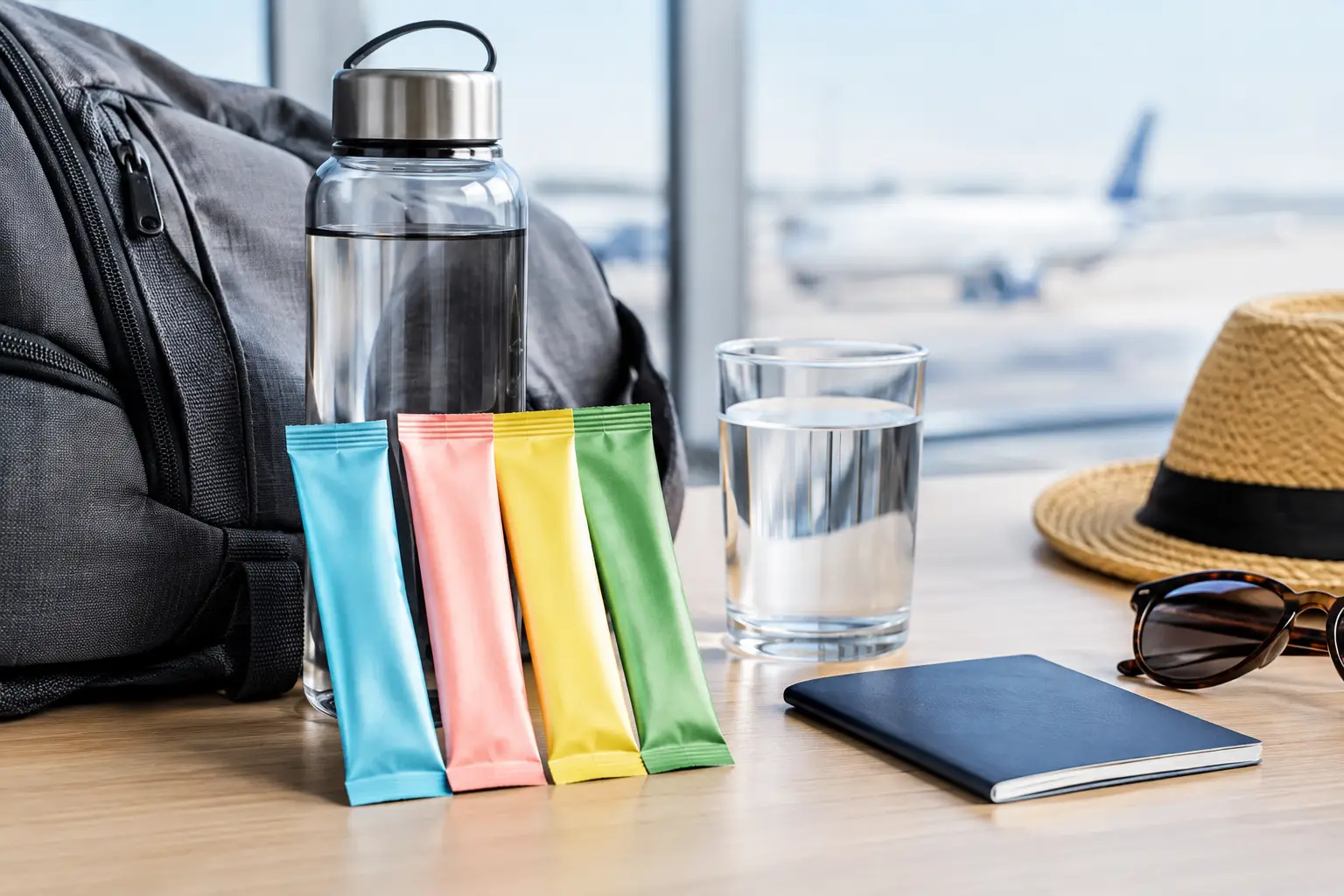
A long airport morning, a warm rental car, coffee before breakfast, and a dinner that runs late can leave you feeling surprisingly off. The best hydration packets for travel are not necessarily the ones with the loudest promises. They are the ones you will actually use, that fit your needs that day, and that do not load your routine with more sugar or stimulation than you want.
Travel changes the basics: your sleep schedule, meal timing, movement, climate, and access to water. You do not need a perfect wellness plan to account for all of it. A few single-serve packets and a refillable bottle can be a practical way to support steadier energy when real life is not running on schedule.
What makes the best hydration packets for travel?
Start with the job you need the packet to do. A low-key work trip, a red-eye flight, a day at a theme park, and a hiking vacation create different hydration needs. There is no one formula that is automatically best for every traveler.
For most busy adults, a good travel hydration packet has a clear electrolyte profile, a reasonable amount of sugar, and ingredients you understand. Electrolytes are minerals, including sodium and potassium, that help your body use the fluids you drink. Sodium is often the number worth paying closest attention to on the label, especially if you have been sweating in heat or moving more than usual.
Taste matters, too. A packet can look great on paper, but it is not helpful if it is so sweet, salty, or artificial-tasting that you leave it in the bottom of your bag. Choose a flavor you can drink consistently with plenty of water.
Look at sodium before the marketing claims
Travel hydration labels can be confusing because front-of-package language tends to focus on broad claims like “energy,” “recovery,” or “hydration.” Turn the packet around. Sodium content, serving size, and total added sugar tell you more about how the mix fits your day than a flashy claim does.
A very low-sodium mix may be fine for sipping during a sedentary flight or a normal day of meetings. If you are outside in high heat, walking miles through a new city, or exercising, you may prefer a more substantial electrolyte mix. The right amount depends on your activity, the weather, your usual food intake, and how much plain water you are drinking.
Be wary of comparing packets scoop for scoop. One brand may call half a packet a serving, while another uses the whole stick. Compare the numbers based on what you would genuinely put in your bottle.
Keep added sugar in perspective
Sugar can improve flavor and can have a place in certain higher-output situations. But many travelers are not looking for another sweet drink between airport snacks, restaurant meals, and coffee runs. For everyday flights, car rides, and conference days, a lower-sugar option is often easier to use regularly.
This is not a rule that requires perfection. If a sweeter packet helps you drink more fluids on a hot day, that can be a workable choice. The useful question is whether the formula matches the moment, not whether it earns a wellness gold star.
Decide whether caffeine helps or complicates things
Some hydration packets include caffeine, often alongside ingredients intended to support focus. That can be useful for an early departure or an afternoon when you still need to be alert. It can also be the wrong fit when you are already on your second coffee, trying to sleep on a plane, or adjusting to a new time zone.
Check the caffeine amount rather than assuming a packet is gentle because it is sold as hydration. If your sleep tends to get thrown off while traveling, having both caffeinated and caffeine-free packets gives you more control. Steady energy is usually more useful than a short burst followed by a crash.
Choose a packet for your actual trip
The most practical travel setup is often a small mix of options rather than a single all-purpose box. Think in terms of your itinerary.
For flights and desk-heavy travel days, choose a low-sugar electrolyte packet that tastes good in a standard water bottle. Cabin air is dry, routines are disrupted, and it is easy to forget water while you are focused on gates, emails, or kids. A packet can make the bottle you bought after security more appealing, but it does not replace drinking enough fluid across the day.
For beach days, outdoor events, and walking-heavy vacations, prioritize a packet with a clearly stated electrolyte amount, particularly sodium. Carry more than you think you need. Heat, long lines, and limited refill stations have a way of stretching a day beyond the plan.
For business travel, consider whether you want clean energy in the same packet. A formula with balanced electrolytes and moderate caffeine may suit a morning meeting after an early flight. For later in the day, switch to a caffeine-free option so your effort to stay hydrated does not work against your evening wind-down.
For family travel, simple usually wins. Pick flavors everyone is willing to drink, and avoid packing a complicated lineup that creates decision fatigue at every stop. No perfection needed – the goal is to make water easier to remember and easier to enjoy.
How to read a travel hydration label without the hype
You do not need a nutrition degree to make a solid choice. Use this quick filter when comparing packets:
- Electrolytes: Look for sodium and potassium listed with clear amounts per serving. A formula that says “electrolyte blend” without showing amounts gives you less to work with.
- Added sugar: Match it to your day. Lower sugar is often a practical default for routine travel, while more active, hot days may call for a different balance.
- Caffeine: Confirm whether it is present and how much is in one serving. Do not let an energy blend catch you by surprise at 4 p.m.
- Serving size: Check whether one stick equals one serving and how much water it is meant to flavor. Concentrating a packet into too little water can make it harder to drink.
- Ingredients you recognize: You do not need a minimalist label at all costs, but you should feel clear about what you are using and why.
Also consider packaging. Stick packs are easy to tuck into a personal item, work tote, or day bag. They travel well, make portioning simple, and do not require measuring. A larger tub can cost less per serving, but it is less convenient when you are moving through airports or sharing a hotel room with three people.
A travel hydration routine that does not take over your day
Hydration works better as a small habit than as a response to feeling completely depleted. Start the day with water before or alongside coffee, especially if you woke up early to travel. Keep a bottle visible during transit. Use a packet when it makes sense for your schedule, activity, or environment.
Try pairing hydration with moments already built into your day: after security, when you arrive at the hotel, before heading out to walk around, or when you return from the pool. These cues work better than relying on willpower while your usual routine is gone.
Food still matters. A hydration packet is not a substitute for meals, especially on trips where you are skipping breakfast, living on snack bars, or eating at odd hours. A simple breakfast with protein and fiber, plus water, can make an airport morning feel far more manageable than caffeine alone.
If you want one versatile option for regular travel, SHIFT hydration from Why The Health is designed around balanced electrolytes, low sugar, and clean energy to support focus without the conventional energy-drink crash. It may be especially useful for early travel days when you want hydration and a more intentional energy choice in one step. If you are traveling later in the day or protecting your sleep, a caffeine-free option may still be the better call.
Pack smarter, not heavier
Bring packets in the bag you will have access to, not only in checked luggage. Put a few in your carry-on, a few in your day bag, and one or two in the pocket you reach for most. That small bit of distribution prevents the familiar moment when your hydration mix is technically on the trip but inaccessible when you want it.
A refillable bottle is equally useful. Fill it after security, refill it at the hotel, and take it with you when you leave for the day. If you are unsure how a packet will taste in a large bottle, start with more water than the minimum suggested amount. You can always make the next one stronger.
The best travel hydration routine is quiet and repeatable: drink water, use electrolytes thoughtfully, eat when you can, and make room for sleep when the schedule allows. A packet is a small tool, but on a day built around delays, meetings, family logistics, or a lot of walking, small tools can make the whole trip feel more manageable.
Leave a Reply